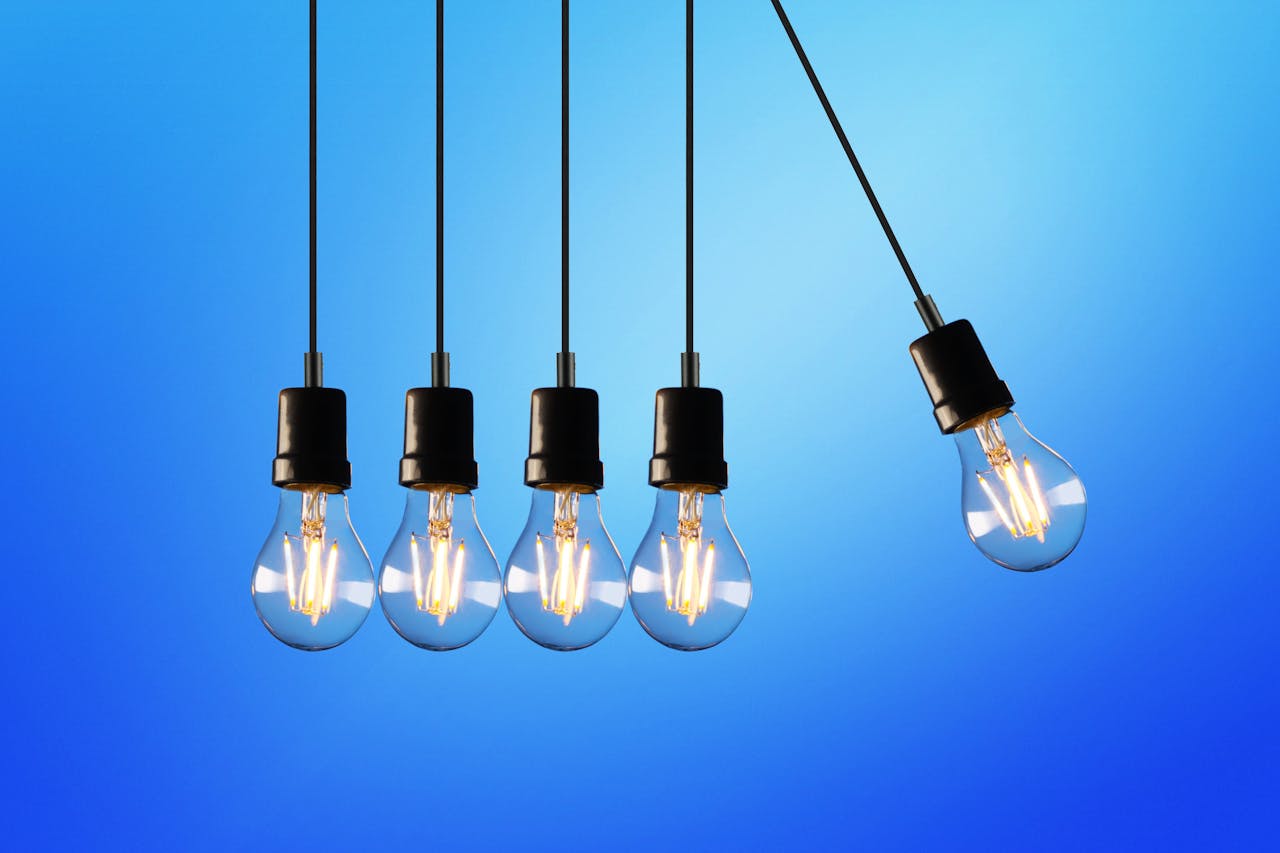
LED lighting saves money because LEDs use roughly 75 percent less electricity than incandescent bulbs to produce the same light, and they last about 25 to 50 times longer. A 10-watt LED replaces a 60-watt incandescent, so a whole-home switch can cut annual lighting use by thousands of kilowatt-hours. In hot climates like Phoenix you save twice, since LEDs give off little heat and ease the load on your air conditioner.
Lighting accounts for a significant portion of your home's electricity consumption. Switching from traditional incandescent or even CFL bulbs to LED lighting is one of the simplest and most effective ways to reduce your energy bills. The savings add up quickly, and the benefits go well beyond just lower utility costs.
How LEDs Save Energy
LED (Light Emitting Diode) bulbs produce light by passing an electrical current through a semiconductor, a fundamentally different process from incandescent bulbs, which produce light by heating a metal filament until it glows. This difference in technology is why LEDs are so much more efficient.
An LED bulb uses approximately 75 percent less energy than an equivalent incandescent bulb to produce the same amount of light. A 10-watt LED bulb, for example, produces roughly the same brightness as a 60-watt incandescent. That means for every hour the light is on, you're using 50 fewer watts of electricity.
Real Savings Numbers
To put this in perspective, consider a home with 30 light fixtures that are on for an average of 5 hours per day. With traditional 60-watt incandescent bulbs, that's 9 kilowatt-hours (kWh) per day, or about 3,285 kWh per year just for lighting. At the average Arizona electricity rate, that adds up quickly.
Replace those same 30 fixtures with 10-watt LED equivalents, and your daily lighting consumption drops to 1.5 kWh, or about 548 kWh per year. That's a reduction of over 2,700 kWh annually. For most Phoenix-area homeowners, this translates to meaningful savings on every monthly bill.
LED Bulbs Last Much Longer
Beyond energy savings, LED bulbs last dramatically longer than their predecessors. A typical LED bulb is rated for 25,000 to 50,000 hours of use, compared to about 1,000 hours for an incandescent and 8,000 to 10,000 hours for a CFL. This means:
- An LED bulb used 5 hours per day will last approximately 14 to 27 years
- An incandescent used the same way would last less than a year
- You'll buy far fewer replacement bulbs over time, saving both money and hassle
- Less time spent on ladders changing hard-to-reach bulbs
Additional Benefits of LED Lighting
Less Heat Output
Incandescent bulbs convert about 90 percent of their energy into heat rather than light. In Arizona, where air conditioning is essential for much of the year, this waste heat forces your HVAC system to work harder. LED bulbs produce very little heat, which means your air conditioner doesn't have to compensate for the heat your lighting generates. This creates a secondary energy savings that's often overlooked.
Better Light Quality
Modern LED bulbs are available in a wide range of color temperatures, from warm, yellowish tones that mimic incandescent light to cool, daylight-balanced white. Many LED bulbs also offer excellent color rendering, meaning colors in your home look natural and vibrant under LED light. Dimmable LED options give you full control over ambiance and brightness.
Durability
LED bulbs are solid-state devices with no fragile filaments or glass tubes. They're resistant to vibration, impact, and temperature fluctuations. This makes them ideal for outdoor lighting, garage fixtures, and other locations where traditional bulbs might fail prematurely.
Environmentally Friendly
LED bulbs contain no mercury, unlike CFL bulbs which require special disposal. Their long lifespan means fewer bulbs end up in landfills, and their lower energy consumption reduces the demand on power plants, which translates to lower carbon emissions.
Where to Start
You don't have to replace every bulb in your home at once. Start with the lights you use most frequently, as these will provide the greatest immediate savings. Good candidates include:
- Kitchen lighting: Kitchens typically have multiple fixtures that run for several hours each day.
- Living room and family room: These high-traffic areas often have lights on throughout the evening.
- Outdoor and security lighting: Lights that run all night benefit enormously from LED efficiency. LED security lights also turn on instantly without the warm-up time that some other technologies require.
- Recessed can lights: Recessed fixtures are often numerous and can be significant energy consumers. LED retrofit kits make upgrading easy.
Professional LED Upgrades
While swapping individual bulbs is straightforward, some lighting upgrades benefit from professional installation. If you're converting older recessed lighting to LED, installing new LED fixtures, adding dimmer switches compatible with LED bulbs, or upgrading your outdoor lighting to LED, a licensed electrician ensures everything is properly wired and up to code.
An electrician can also help you plan a whole-home LED conversion, recommending the right color temperatures and brightness levels for each room and ensuring your existing dimmers and switches are compatible with LED technology.
Frequently Asked Questions
How much can LED bulbs cut my energy use?
LED bulbs use roughly 75 percent less energy than equivalent incandescent bulbs and noticeably less than CFLs to produce the same brightness. A 10-watt LED can replace a 60-watt incandescent, so for every hour the light is on you use about 50 fewer watts. Across a whole home, that often cuts annual lighting consumption by thousands of kilowatt-hours.
How long do LED bulbs last?
Most LED bulbs are rated for about 25,000 to 50,000 hours, compared to roughly 1,000 hours for an incandescent and 8,000 to 10,000 hours for a CFL. Used about 5 hours a day, an LED can last roughly 14 to 27 years, which means far fewer replacement bulbs and less time on a ladder.
Are LED bulbs worth the higher upfront cost?
Yes. While LED bulbs cost more to buy than incandescent or CFL bulbs, they use far less electricity and last many years longer, so they typically pay for themselves through lower energy bills and fewer replacements. Starting with the lights you use most gives you the fastest return.
Do LED lights help lower air conditioning costs?
They can. Incandescent bulbs turn about 90 percent of their energy into heat, while LEDs produce very little. In Arizona, where the AC runs much of the year, that extra heat makes your cooling system work harder, so switching to LEDs creates a secondary savings on cooling that is easy to overlook.
Are LED bulbs dimmable, and how long is the payback period?
Many LED bulbs are dimmable, but you need bulbs labeled dimmable and a dimmer switch rated for LEDs, otherwise you may see flicker or buzzing. The payback period depends on how many hours your lights run and your local electricity rate, so heavily used fixtures pay back fastest. A licensed electrician can confirm compatibility and help you plan an upgrade, and Acosta Electric offers free estimates.
Sources & Further Reading
Ready to Upgrade to LED Lighting?
Acosta Electric installs LED lighting for homes and businesses throughout the Phoenix metro area. Start saving on energy today.
Call 623-975-9011 Get a Free Estimate